Secop environmental friendly hermetic refrigeration compressors

Refrigeranti a base di idrocarburi

Gli idrocarburi sono diventati una soluzione naturale sostenibile preferibile e sono già presenti in diverse applicazioni domestiche, commerciali leggere, di condizionamento dell'aria, pompe di calore e persino in campo medico.
Investimenti minimi in componenti e modifiche al design ne predestinano l'uso nei sistemi di raffreddamento convenzionali originariamente progettati per gli HFC.

Sintesi degli argomenti:

Isobutano (R600a) e Propano (R290)

In termini chimici, l'idrocarburo (HC) è un composto elementare composto da idrogeno e carbonio che si trova naturalmente nell'ambiente nel petrolio grezzo, nel gas naturale o nel carbone. Si tratta di un'alternativa non tossica ed ecologica ai refrigeranti a base di fluorocarburi (CFC/HCFC/HFC), che sono dannosi per l'ambiente in quanto sono stati collegati ai danni all'ozono e all'effetto serra. Oltre ai vantaggi per l'ambiente, gli idrocarburi sono più economici dei refrigeranti sintetici, poiché sono prodotti come sottoprodotti del gas e del petrolio. Gli HC funzionano quasi alle stesse temperature degli HFC, ma con una carica inferiore. Le buone proprietà termodinamiche e fisiche rendono gli HC una soluzione efficiente dal punto di vista energetico.

Basso potenziale di riscaldamento globale (GWP)

Gli idrocarburi hanno un basso GWP, zero ODP e, secondo lo standard di sicurezza ASHRAE 34, sono classificati nel gruppo A3 - altamente infiammabili con bassa tossicità. Trattandosi di sostanze infiammabili con potenziali conseguenze, durante la progettazione, l'assemblaggio, il funzionamento e la manutenzione è necessario prendere in considerazione le precauzioni di sicurezza descritte in vari standard internazionali e nazionali.

L'isobutano (R600a) è ampiamente utilizzato in applicazioni di piccole dimensioni, come frigoriferi domestici, congelatori, minibar, apparecchi automobilistici e marittimi. Il propano (R290), invece, è comunemente utilizzato nella refrigerazione commerciale per la ristorazione e la vendita al dettaglio, nei merchandiser, nelle pompe di calore, nel condizionamento dell'aria e nelle applicazioni mediche.


Posizione dei refrigeranti di Secop | Linee guida per l'applicazione di R600a e R290

Informazioni di base

Common Questions About Hydrocarbon Refrigerants

What are hydrocarbon refrigerants and why are they sustainable?

Hydrocarbon refrigerants such as R600a (isobutane) and R290 (propane) are natural compounds made of hydrogen and carbon that occur in nature. They have zero ozone depletion potential and a very low global warming potential (GWP). Compared to synthetic refrigerants like HFCs, they protect the ozone layer and contribute significantly less to the greenhouse effect. Secop has been developing highly efficient compressors for these environmentally friendly refrigerants for over 25 years.

What applications are R600a and R290 suitable for?

R600a (isobutane) is mainly used in applications with demand of low cooling capacity: household refrigerators, freezers, minibars, mobile cooling units for automotive and marine use. R290 (propane) is suitable for commercial cooling applications such as catering, food retail, merchandisers, heat pumps, air conditioning, and medical refrigeration equipment.

What are the advantages of hydrocarbon refrigerants compared to synthetic alternatives?

Hydrocarbons offer several advantages: they require 40–50% less refrigerant charge than other refrigerants, are more cost-effective than synthetic alternatives, enable higher energy efficiency and thus lower operating costs. They are also compatible with many existing system components, requiring only minimal investment in component or design changes for conventional cooling systems.

Are hydrocarbon refrigerants dangerous because they are flammable?

Hydrocarbons are classified as A3 by ASHRAE 34 (slightly flammable with low toxicity). When handled, used, and stored correctly, the risk of fire is low. Refrigerant charges are limited, and strict safety standards apply for design, installation, operation, and maintenance. Modern systems feature hermetic seals and safety measures that minimize risks

What safety standards and regulations apply to flammable refrigerants?

International and national standards have been developed for the use of flammable refrigerants, including ASHRAE 34, ISO 817, the EU Directive 2014/34/EU (ATEX), and the German Industrial Safety Ordinance. These standards specify charge limits, safety measures, electrical requirements, and maintenance regulations. For example, the latest revision of IEC 60335-2-89 increased the allowable charge for A3 refrigerants from 150 g to 500 g per circuit.

Can I retrofit an existing system with R134a or R404A to R600a or R290?

No. Retrofitting existing CFC or HFC systems to R600a or R290 is not allowed. These systems are not approved for operation with flammable refrigerants, and electrical safety has not been tested according to standards for flammable refrigerants. Hydrocarbons may only be used in new systems specifically designed for them.

What should be considered when maintaining or servicing equipment with R600a or R290?

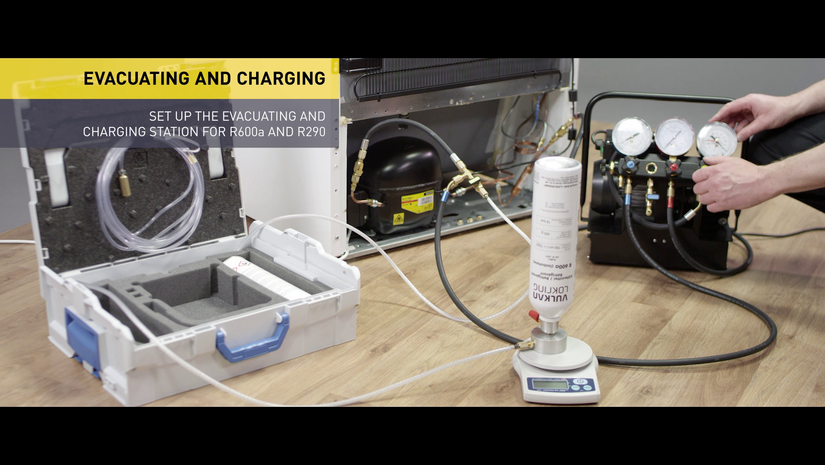
Maintenance on systems with flammable refrigerants should only be performed by trained, experienced personnel. Key precautions include: removing all ignition sources, ensuring proper ventilation, using leak detection equipment, wearing personal protective equipment, and opening cooling systems with a pipe cutter (not a saw). Disposal should be controlled outdoors, not through recycling cartridges.

How does Secop contribute to the development of hydrocarbon technology?

Secop has been committed to hydrocarbons as refrigerants since 1993 and has been developing highly efficient compressors for R600a and R290 for over 25 years. The company continuously offers new models with higher efficiency for various applications, including variable-speed compressors that save up to 40% energy and specialized solutions for extreme temperatures and medical applications.

What role do hydrocarbons play in complying with the F-Gas Regulation?

EU F-Gas Regulation 517/2014 mandates the gradual phase-out of high-GWP refrigerants. Hydrocarbons like R600a and R290 have very low GWP and are therefore an ideal long-term solution for compliance. They provide an environmentally friendly alternative to R134a and R404A, especially for low/medium back pressure (LBP/MBP) applications.

How do I find the right Secop compressor for my hydrocarbon application?

Secop offers several digital tools to assist: the Secop Toolkit app helps calculate capillary tubes for R290, R600a, and R170. The Application Selector supports choosing the most suitable compressor for specific applications and operating conditions. For customized solutions, Secop recommends contacting the specialist team directly to find the optimal solution for your specific cooling application.

Utilizziamo i cookie per personalizzare i contenuti e gli annunci, per fornire funzioni di social media e per analizzare il nostro traffico. Condividiamo inoltre le informazioni sull'utilizzo del nostro sito con i nostri partner di social media, pubblicità e analisi. Cliccate su “Gestione delle preferenze” se volete saperne di più sui nostri cookie e regolare le vostre preferenze. Facendo clic su “Accettare tutti”, si accetta l'uso di tutti i cookie come descritto nella nostra Informativa sulla privacy. Informativa sulla privacy