Variable-Speed Drive

Variable-speed compressor motors are electronically controlled. Full load operation is extremely rare in most cooling applications, restricted to a few days per year.

This unique technology makes capacity automatically adapt to your actual requirement. The compressor runs at low speed most of the time, minimizing energy consumption.

On top of this, system efficiency is greatly improved thanks to reduced loss when less heat is transferred via the evaporator and condenser. Altogether, substantial energy savings can be obtained.

Secop Variable-Speed Compressors

From the 1998 when the first TLV variable-speed compressor was developed, Secop has continuously developed and optimized its variable-speed compressors and control electronics for commercial applications and for DC battery-driven solutions.

Today, we offer a full range of variable-speed drive compressors from the small BD-Series for mobile cooling up to the S-Series for large food retail solutions, including a green hydrocarbon refrigerants range.

Secop understands that operation at full capacity is extremely rare in most cooling applications, that’s why we’ve built variable-speed controlling devices into the BD, DLV, NLV, and SLV/E series that automatically adapt the speed to your operating needs.

This means compressors usually run at low speed, thus minimizing power consumption and greatly improving efficiency.

Secop variable-speed compressors are designed for refrigeration systems using the designated refrigerants R600a (isobutane) and R290 (propane).

Variable-speed drive software

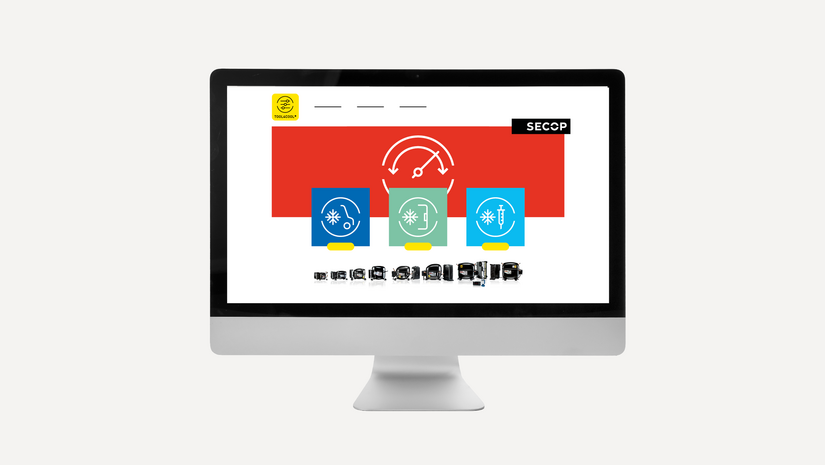
Optimal control and monitoring a cooling system is eseential. Secop's unique software tool Tool4Cool®  lets you configure Secop’s Cool Capacity Drive (°CCD) variable-speed (inverter) compressors precisely to your cooling systems.

In-Depth Article and Tool4Cool® 

AC- and DC-Powered Variable-Speed Drive Compressors

  • Variable-Speed Drive Compressors

    Variable-Speed Drive Compressors

    | Literature | Quick References

    Download (5.48 MB)
  • DC-Powered Compressors for Mobile Cooling

    DC-Powered Compressors for Mobile Cooling

    | Literature | Quick References

    Download (2.19 MB)

Common Questions About Variable-Speed Drive

What does “Variable-Speed Drive” (VSD) mean?

The Variable-Speed Drive technology refers to Secop compressors with electronically controlled motor speed that automatically adjust their capacity to match the actual cooling demand.

Why are VSD compressors more energy-efficient than fixed-speed compressors?

Because they typically run at lower speeds (“low speed”), create less extreme operation pressures which reduces energy consumption and minimizes system losses. Energy savings of approximately 20% to 40% are achievable.

Since when and in which product lines does Secop use VSD technology?

Secop developed the first TLV Variable-Speed compressor in 1998 and today offers a full range of VSD compressors – e.g., the BD series, NLV, and SLV/SLVE – covering applications from small mobile cooling to large food retail systems.

For which applications and markets are VSD compressors suitable?

The technology is used in mobile cooling (e.g., DC battery-powered units), light commercial refrigeration (LBP/MBP), food retail applications, and large stationary systems.

Which technical features of the VSD controllers are particularly noteworthy?

The inverter controllers (e.g., °CCD) allow operation with the perfect cooling capacity of the compressor by adjusting the motor speed. They provide a speed ratio of approximately 1:4, and thus high efficiency, integrated protection features, modular architecture, and more.

What role does the Tool4Cool® software play in combination with VSD compressors?

Tool4Cool® enables precise configuration, monitoring, and optimization of VSD compressors – parameters can be adjusted, data can be logged, and systems can be monitored remotely.

Which environmental or sustainability aspects does Secop’s VSD technology support?

By reducing energy consumption, improving overall system efficiency, and lowering waste heat and noise emissions, VSD technology contributes to sustainable refrigeration.

What operational advantages result from using VSD compressors?

Key benefits include lower power consumption, less stressful short-time operation, more stable cabinet temperatures, the possibility of smaller displacement compressors, and reduced noise levels.

What challenges or requirements exist when designing systems with VSD compressors?

System selection and design differ from fixed-speed compressors: for example, selection based on maximum capacity, optimization for part-load operation, adjustments to appliance design (evaporator/condenser sizing), and the need for suitable control systems.

We use cookies to personalize content and ads, to provide social media features and to analyze our traffic. We also share information about your use of our site with our social media, advertising and analytics partners. Click "Manage preferences" if you would like to read more about our cookies and adjust your preferences. By clicking "Accept all", you agree to the use of all cookies as described in our Privacy Policy. Privacy Policy