Replacing a Refrigeration DC Compressor

In our three-part "How-to" video series, we demonstrate how to replace a compressor such as the BD-P with the new BD Nano generation. While the replacement is shown here on a portable cooling box, the procedural steps are very similar for other applications.

Important: This work must only be performed by qualified professionals, and all safety regulations regarding flammable refrigerants must be strictly observed. R134a refrigerant must be extracted and disposed of or recycled due to its environmental impact (greenhouse gas).
The necessary steps are demonstrated by one of our laboratory staff members, who is also a refrigeration technician, at Secop’s headquarters in Flensburg, Germany.

Contents:
Replacing a BD-P with a BD Nano Compressor

Preparation and Refrigerant Removal

Before starting, identify the three key connectors: suction, discharge, and the process connector. To safely begin, you must remove the existing refrigerant (such as R134a):

  • Pierce the Tube: Use piercing pliers or a piercing valve to access the process tube.
  • Verify Vacuum: Ensure the system is fully evacuated. You should hear air being drawn in when the clamp is removed, confirming a vacuum.
  • Safety First: Removing all flammable refrigerant is critical before using a brazing flame.

Removing Components

Once the system is empty, you can begin deconstructing the old setup:

  • Unbraze the Compressor: Heat the connections to remove the old unit.
  • Replace the Filter Drier: The drier must be replaced whenever a refrigeration circuit is opened.
  • Cut the Capillary Tube: Use a specific capillary tube cutter rather than unbrazing it. This prevents the delicate tube from cracking and ensures it remains unobstructed.

Installing the BD Nano

The new compressor requires minor prep work to fit into the existing machine compartment:

  • Grommets: Install the supplied rubber grommets by screwing them into the base.
  • Mounting: Because the BD Nano may have different dimensions than older units, you may need to drill new mounting holes in the base plate.
  • Tube Alignment: Pre-bend the suction and discharge tubes so they align with their final brazing positions.

Brazing and Sealing

With the compressor in place, the circuit must be resealed:

  • Schrader Valve: Braze a Schrader valve onto the process tube to allow for future charging.
  • Drier Installation: Remove burrs from the tubes to avoid flow restriction. Insert the capillary tube deep enough into the drier (on the outlet side) so that filler material doesn't accidentally seal the opening.
  • Alloy Selection: Use Silfos for copper-to-copper joints. For joining different materials like steel and copper, use silver-coated filler metal with flux.

Final Evacuation

The last step before charging is a final evacuation of the system:

  • Service Valve: Install the service valve into the Schrader valve using a specialized tightening tool.
  • Vacuum Pump: Attach to the evacuation hose and open the valve. The pump will now pull a vacuum; the duration depends on the size of your system.

Mounting and Connecting the Controller

Controller Wiring and Installation

Once the vacuum is established, you can begin the electrical setup. The process is streamlined by focusing only on the essential connections required for DC operation.

  • Primary Connections: Attach the positive and negative power cables directly to the controller.
  • Fan Connection: Connect the cable for the condenser fan.
  • Simplify the Rig: Any remaining cables, including those for a 230 V supply, are no longer needed if you are operating on a 12V system.
  • Secure Mounting: Simply push the controller onto the compressor until it snaps firmly over the mounting screws.

Integrating Sensors and Tool4Cool®

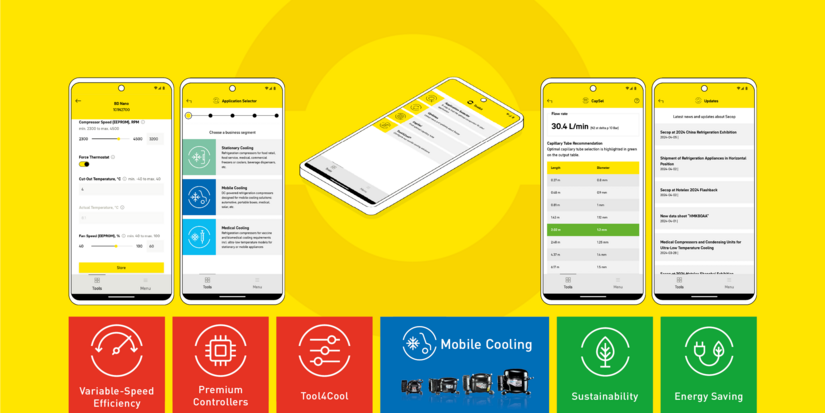
To modernize the system control, the original mechanical components are replaced with digital alternatives that interface with the Tool4Cool® app.

  • Thermostat Terminals: Connect the thermostat leads to the C and T terminals on the controller.
  • Sensor Upgrade: Replace the original box sensor with a dedicated NTC resistor sensor.
  • Digital Control: This configuration allows the app to program the compressor and manage temperature based on the new sensor's data .

System Charging and Finalization

The final step is charging the refrigerant to the circuit. This requires precision to avoid introducing air into the freshly evacuated system.

  • Maintain Vacuum: Close the evacuation valve before removing the hose to ensure the system remains under vacuum.
  • The "Gas Mouse": Connect a pre-charged refrigerant cartridge (often called a "gas mouse") to the valve.
  • Venting the Hose: Briefly open the valve to vent the hose; this clears out any trapped air so only pure refrigerant enters the system.
  • Charging: Open the valve fully to release the refrigerant into the system. Use a scale to ensure the correct amount of refrigerant is being charged into the system.
  • Verification: Once the compressor is running via the Tool4Cool® interface, remove the charging tools and seal the valve with a cap to ensure a leak-tight finish.

Connecting the Gateway and Configuring Tool4Cool®

Hardware Connection and Setup

The setup process begins with unpacking the Gateway, which includes all necessary components in the box. Once the controller is connected to the compressor, the Gateway can be hooked up for programming using the specifically labeled cables.

To ensure a proper connection, follow these wiring steps:

  • Positive Terminal: Connect the O-Plus cable to the positive terminal on the compressor controller.
  • LIN Contact: Attach the green data cable to the LIN contact.
  • C Contact: Attach the brown cable to the C contact.
  • USB Interface: Connect the Gateway to a mobile phone using the supplied USB data cable.

Programming via Tool4Cool®

After the system is charged and a connection to the Tool4Cool® app is established, you can start the compressor and begin the programming sequence.

To achieve maximum performance, you can manually adjust the speed settings:

  • Increase RPM: Increase the current speed from 3,000 RPM to 4,500 RPM by swiping up within the app.
  • Transmit Data: Send the new programming to the controller by pressing the designated button.

Performance Results

Once the controller receives the updated instructions, the compressor starts running at full power. You will observe an immediate drop in temperature as the system stabilizes at the highest performance level.

Tool4Cool® Mobile

Instructions

We use cookies to personalize content and ads, to provide social media features and to analyze our traffic. We also share information about your use of our site with our social media, advertising and analytics partners. Click "Manage preferences" if you would like to read more about our cookies and adjust your preferences. By clicking "Accept all", you agree to the use of all cookies as described in our Privacy Policy. Privacy Policy